
A blocked toilet always seems to strike at the worst time. Before you panic or reach for harsh chemicals, know that most blockages clear with the right technique and a bit of patience. This guide walks you through how to unblock a toilet safely at home, from the plunger method to a closet auger. It also covers the warning signs that point to something bigger, a blocked drain or sewer line that no plunger will fix. If you live in Western Sydney, older pipes and thirsty tree roots make that second scenario more common than you might think.
How Do You Unblock A Toilet With A Plunger?
A flange plunger is the right tool for a toilet, not a flat cup plunger. Fit the rubber flange into the drain hole to form a tight seal, add enough water to cover the plunger head, then push and pull with firm strokes. Most simple blockages shift within a dozen plunges.
The flange plunger has an extra rubber sleeve that folds out from the cup. That sleeve seals the curved toilet outlet far better than a flat plunger built for sinks. A good seal is what creates the suction and pressure that breaks up the blockage.
Start slow on the first push to release trapped air, then build up force. Keep the plunger submerged so you move water, not air. If the level is very high, bail some out first so you do not splash. After several strokes, pull away sharply and watch whether the water drains.
Can Hot Water And Dish Soap Unblock A Toilet?
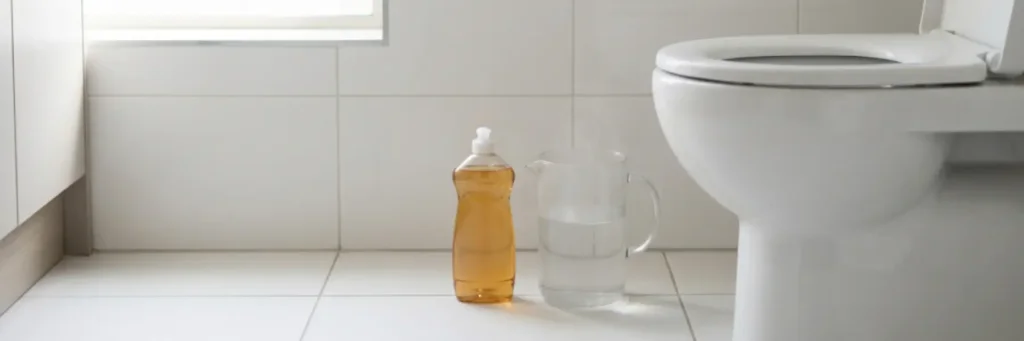
Yes, warm water and dish soap can loosen a soft blockage caused by waste or toilet paper. Squirt a generous amount of dish soap into the bowl, wait ten minutes, then pour in warm water from waist height. The soap acts as a lubricant and the water adds pressure. Use warm water, never boiling.
Boiling water is the mistake to avoid. A sudden pour of boiling water can crack a porcelain bowl or soften older seals and plastic fittings. Warm to hot tap water is safe and is a gentle way to unblock a toilet without chemicals.
Skip this method if the bowl is already full or overflowing. Adding more liquid to a bowl that will not drain only risks a spill. Plunge or bail the level down first. This trick works best on a partial blockage where water still trickles away.
Why Shouldn’t You Pour Chemical Drain Cleaner Down A Toilet?
Chemical drain cleaners are harsh on plumbing and dangerous to handle. Products based on caustic soda or acid react and heat up inside the pipe, which can corrode metal pipes and soften plastic ones. Older pipes are most at risk. The fumes and splashes can also cause serious burns.
These cleaners rarely fix the real problem either. If a toilet is fully blocked, the chemical just sits on the clog and attacks whatever it touches, including your pipe walls. Repeated use wears pipes down and can turn a blockage into a leak.
There is a safety catch too. Never plunge or snake a drain straight after pouring in a chemical cleaner. The pressure can splash caustic liquid back at your face and skin. If a product has already gone in, flush with plenty of water and call a plumber rather than forcing it. For advice on exposure, the Poisons Information Centre is available on 13 11 26.
How Do You Use A Toilet Auger To Clear A Blockage?
A toilet auger, also called a closet snake, reaches blockages a plunger cannot. Place the curved end into the bowl outlet, then crank the handle to feed the cable into the trap. When you feel resistance, keep turning to break through or hook the object, then wind it back out.
A toilet auger has a rubber sleeve on the elbow so it will not scratch the porcelain. Do not use a standard drain snake meant for sinks, as it can mark the bowl. Feed the cable gently rather than forcing it around the trap.
Once you break through, run the auger back and forth a few times to clear the passage fully. Flush to check the flow. If the auger meets a solid wall of resistance and nothing improves, stop. That often means the problem sits further down the line, beyond the toilet itself.
How Do You Know It’s A Blocked Sewer, Not Just The Toilet?
If more than one fixture plays up at once, the problem is likely your drain or sewer, not the toilet. Watch for gurgling from the shower or floor drain when you flush, several slow fixtures at the same time, or wastewater rising near an outside gully. Those signs mean the blockage sits deeper.
A single blocked toilet is usually a local clog. A blocked sewer or shared drain shows up across the whole house, because every fixture empties into the same main line. Sydney Water lists a few telltale signs. These include slow-emptying sinks, a toilet that gurgles, and wastewater overflowing from the outside gully.
Is it the toilet or the sewer?
| Sign | Likely just the toilet | Likely the sewer or drain |
|---|---|---|
| Which fixtures are affected | Only the toilet | Toilet plus sinks, shower or floor drain |
| Gurgling elsewhere | None | Shower or floor drain bubbles when you flush |
| Where water backs up | In the bowl | At floor drains or the outside gully |
| Pattern | A one-off blockage | Keeps coming back |
Sydney Water also explains how to tell whose pipe is blocked. Odds are the fault sits in your private pipes when the neighbours have no trouble, nothing is shared, and the street stays dry. You are responsible for the pipes on your property up to the Sydney Water main, so clearing that section is a job for a licensed plumber.
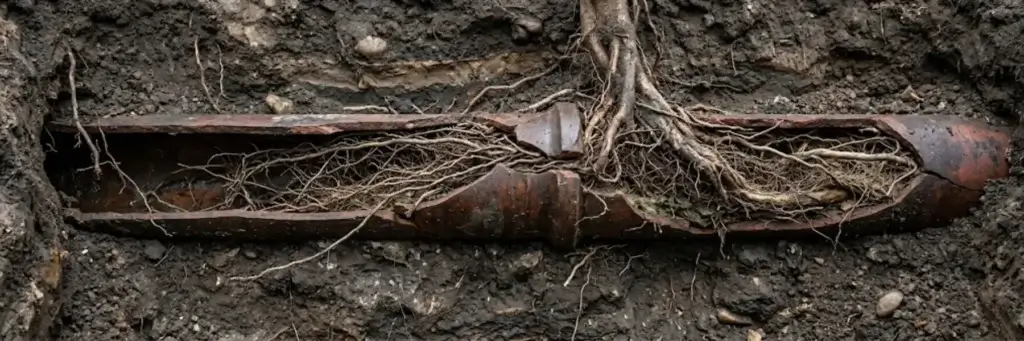
In older Western Sydney homes, the usual culprit is tree roots. Many older properties still run earthenware or clay sewer pipes, and roots push into the tiny cracks at the joints to reach the water inside. Sydney Water warns that roots grow and take up space until drainage slows to a crawl. Avoid planting trees within six metres of your wastewater pipes, and ask a plumber about a camera inspection if you suspect roots.
When Do You Need A Licensed Plumber And A Certificate Of Compliance?
Call a licensed plumber when DIY fails, when several fixtures back up, or when wastewater overflows. If the fix means repairing or replacing part of your drain or sewer, that work is regulated in NSW. Your plumber must issue a Certificate of Compliance once it passes final inspection and give you a copy.
Clearing a blockage with a plunger or auger is routine DIY. Repairing a cracked sewer pipe or replacing a collapsed section is not. In New South Wales, that kind of drainage and sewer work is regulated, and only a licensed plumber can carry it out. The Certificate of Compliance is your proof the job was done to standard, so keep it with your property records.
An overflowing toilet or a sewage backup counts as an emergency. Standing wastewater is a health risk, so it needs a fast response, not another round of DIY. A blocked drain that keeps returning is also worth a professional look, since a camera inspection can find the cause. At that point, an emergency plumber can clear the line and advise on any repair.
Frequently Asked Questions
Why does my toilet keep blocking?
Repeat blockages usually mean something structural rather than a one-off clog. Common causes are flushing wet wipes or paper towel, a build-up inside the pipe, or tree roots in the drain. Sydney Water reports that wet wipes not built for flushing contribute to 75 percent of wastewater blockages. If it keeps happening, a camera inspection can find the real cause.
Is it safe to use boiling water to unblock a toilet?
No. Boiling water can crack a porcelain bowl and soften older seals or plastic fittings. Warm to hot tap water is the safe choice. Add a good squirt of dish soap first, wait a few minutes, then pour the warm water in from waist height to help shift a soft blockage.
Who is responsible for a blocked sewer in Sydney?
You are responsible for the pipes on your property up to the point where they connect to the Sydney Water main. If the blockage sits in that private section, you need a licensed plumber to clear it. If neighbours have the same problem or water overflows on public land, it may be Sydney Water’s responsibility, so report it to them.
What should I do if my toilet is overflowing?
Turn off the water at the isolation valve behind the toilet or at the cistern to stop the bowl filling. Do not flush again. Mop up safely and avoid contact with wastewater. An overflowing toilet or sewage backup is an emergency, so call a 24/7 emergency plumber rather than trying more DIY.
Can I put drain cleaner down a blocked toilet?
It is best avoided. Caustic drain cleaners can corrode pipes and are dangerous to handle, and they often just sit on top of a full blockage without clearing it. Never plunge straight after using one, because the pressure can splash the chemical back at you. A plunger, an auger, or a plumber is the safer route.
The Bottom Line
Most of the time you can unblock a toilet yourself with a plunger or an auger. The simple rule is easy to remember. If one flush is slow, try DIY, but if the whole house gurgles, call a plumber.
Sigma Plumbing handles blocked toilets, blocked drains, and sewer problems across Western Sydney, from Parramatta to Liverpool. It is an emergency plumber Sydney locals can call any time for a true 24/7 callout and free quotes from licensed plumbers.
Got a blockage that will not budge? Call Sigma Plumbing on 0426 582 778 or email Info@sigmaplumbing.com.au to book a licensed plumber today.